Building an Effective Safety Program: A Step-by-Step Guide for Supervisors and Safety Leaders
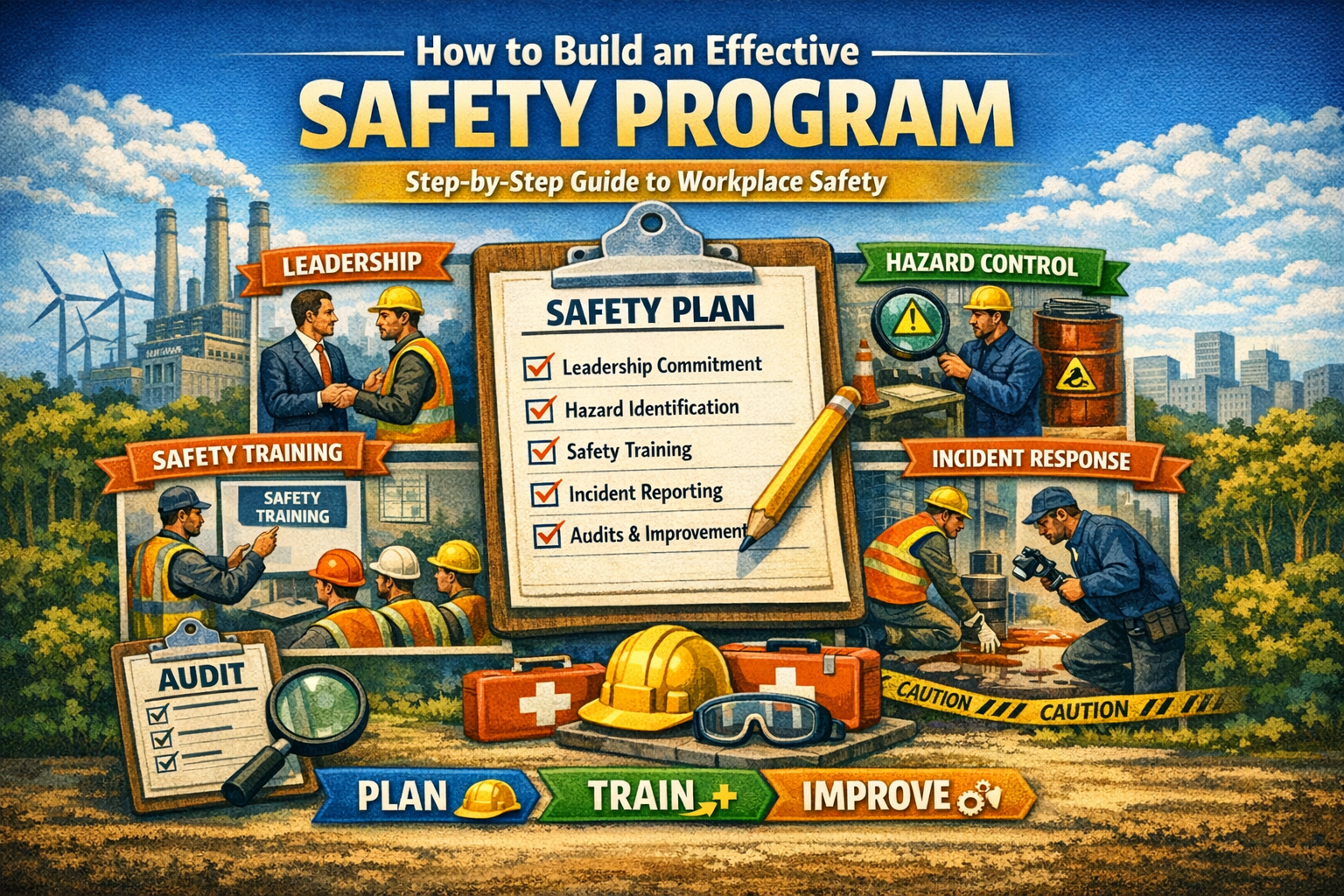
A safety program is more than a binder of policies — it’s a living system that protects employees, prevents injuries, and strengthens your organization. Whether you’re starting from scratch or refining an existing program, this guide walks you through the essential elements of a safety program that actually works.
1. Establish Leadership Commitment
Safety starts at the top. Without visible leadership support, safety becomes optional.
Key actions:
- Include safety in your mission statement
- Set clear safety goals for employees of all levels and track progress
- Allocate budget and resources
- Participate in safety meetings and walkthroughs
- Hold supervisors accountable for safety performance
Why it matters: Employees follow what leaders model. Leadership commitment sets the tone for the entire program.
2. Understand Regulatory Requirements
Before building your program, know what’s required.
Steps:
- Review OSHA standards relevant to your industry
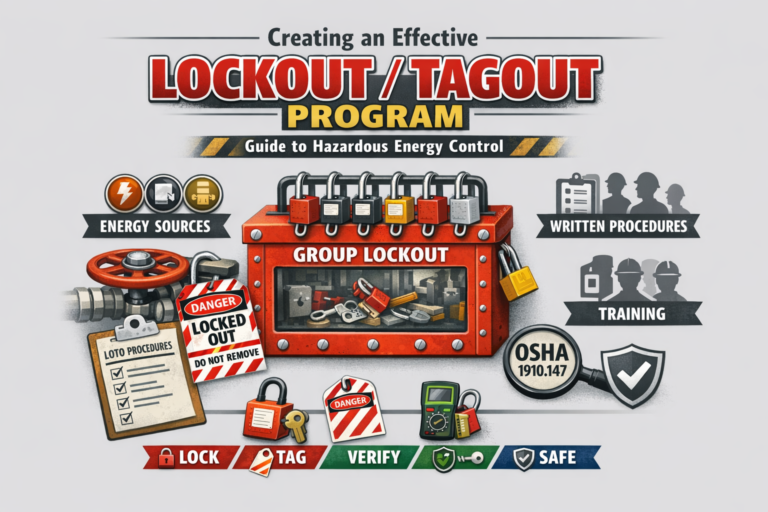
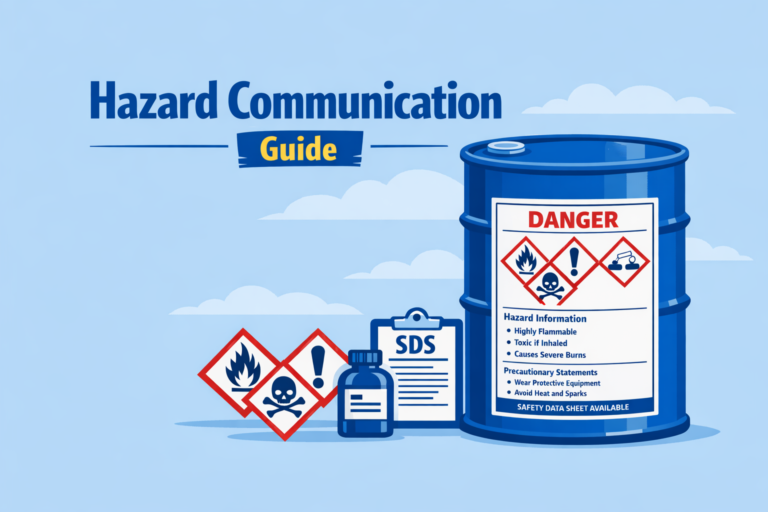
- Identify required written programs (e.g., LOTO, HazCom, PPE)
- Determine training requirements
- Understand recordkeeping and reporting obligations
Tip: Use OSHA’s Recommended Practices as a baseline, then build beyond compliance. If you are unsure where to start, here is an overview of what employers should know. OSHA Compliance Basics: What Every Employer Must Understand
3. Identify Hazards and Assess Risks
You can’t control what you haven’t identified.
Tools to use:
- Job Hazard Analysis (JHA) (Job Hazard Analysis (JHA): A Practical, Step‑by‑Step Framework)
- Workplace inspections
- Near miss reporting
- Employee feedback
- Risk matrices
Goal: Create a hazard inventory and prioritize risks based on severity and likelihood.
4. Apply the Hierarchy of Controls
Don’t jump straight to PPE — use the full hierarchy.
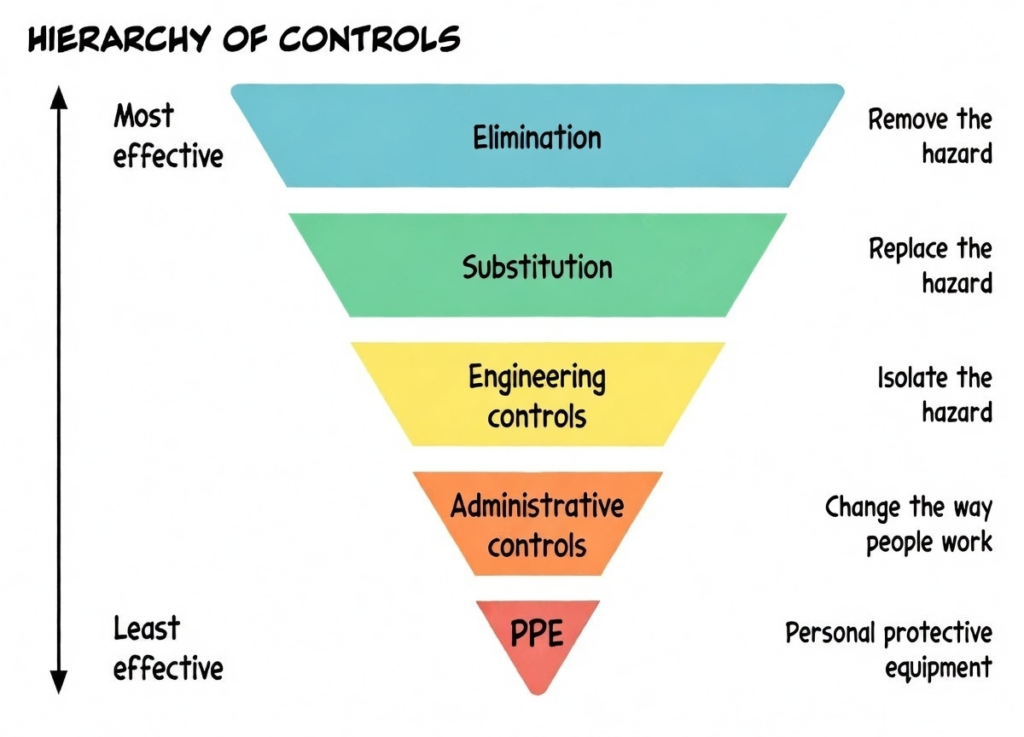
Control levels:
- Elimination
- Substitution
- Engineering controls
- Administrative controls
- PPE
Example: Instead of issuing respirators, consider switching to a less toxic chemical or installing ventilation. More info here: The Hierarchy of Controls: Reducing Workplace Hazards.
5. Develop Written Policies and Procedures
Documentation creates consistency and accountability.
Include:
- Safety policy statement
- SOPs for high-risk tasks
- Emergency response plans
- Reporting procedures
- Contractor safety requirements
Best practices:
- Use clear, simple language
- Include visuals when possible
- Review and update regularly
6. Train Employees Effectively
Training must be practical, relevant, and ongoing.
Training types:
- New hire orientation
- Job-specific training
- Annual refreshers
- Toolbox talks
- Hands-on demonstrations
Make it stick:
- Use real examples
- Reinforce with microlearning
- Assess understanding
7. Create a Reporting and Investigation System
Encourage employees to report hazards, near misses, and incidents.
System features:
- Easy access (digital or paper)
- Anonymous option
- Blame-free culture (Blame‑Free Incident Investigations: Why They’re Essential for Workplace Safety)
- Root cause analysis
- Corrective action tracking
Follow-up matters: Investigate every report and close the loop with employees.
8. Plan for Emergencies
Emergencies are unpredictable — your response shouldn’t be.
Include:
- Fire and medical response
- Chemical spill procedures
- Evacuation plans
- Severe weather protocols
- Drill schedules
Coordinate with: Local fire departments, EMS, and emergency planners.
9. Conduct Audits and Inspections
Regular audits keep your program honest and effective.
Audit types:
- Compliance audits
- Program effectiveness reviews
- Behavioral observations
- Safety walkthroughs
Use findings to:
- Update procedures
- Improve training
- Refine controls
- Track progress
10. Engage Employees and Build Safety Culture
Safety works best when it’s shared.
Ways to engage:
- Involve employees in JHAs
- Ask for feedback on procedures
- Recognize safe behavior
- Include safety in performance reviews
- Empower employees to stop unsafe work
Culture is built through: Trust, consistency, and shared responsibility.
Conclusion
An effective safety program is built on leadership, structure, and continuous improvement. It’s not a one-time project — it’s a living system that protects people and strengthens your organization. Use this guide to build a program that works in the real world, not just on paper.