
Fall Protection: Keeping Workers Safe at Heights
I still remember the sound. Not the impact thankfully, there wasn’t one, but the metallic scrape of a worker’s boot losing grip on a storage tank twenty feet up. His safety harness caught him, of course. The system worked. But in that half-second before the lanyard went taut, I watched his face cycle through surprise, terror, and relief. That moment reinforced something I’d known theoretically but felt literally for the first time: fall protection isn’t just about compliance or checking boxes. It’s about people going home whole at the end of their shift.
Falls remain one of the most deadly hazards in the workplace. According to OSHA, falls account for a significant portion of construction fatalities each year, and they’re not limited to construction sites. Manufacturing facilities, warehouses, maintenance operations—anywhere there’s elevation, there’s risk. Yet despite decades of regulations and technology improvements, I still see the same mistakes repeated across industries. Let’s change that.
Why Fall Protection Fails (Hint: It’s Not What You Think)
Here’s what I’ve learned after years of conducting fall protection audits and incident investigations: the problem is rarely the equipment. Modern fall protection gear is incredibly reliable when used correctly. The breakdown almost always happens at the human and organizational level.
The most common issue? People don’t understand the system they’re using. I’ve watched workers clip into anchor points that couldn’t hold their weight. I’ve seen lanyards attached to handrails that would snap like toothpicks in a fall. I’ve documented countless incidents where workers wore harnesses but never connected them to anything…essentially wearing a very uncomfortable belt.
This happens because fall protection training often focuses on how to put on a harness rather than understanding the complete fall protection system. It’s like teaching someone to buckle a seatbelt without explaining that the car also needs brakes, airbags, and a crash-resistant frame. The harness is just one component of a lifesaving system that only works when every element functions together.
1910.140 – Personal fall protection systems. | Occupational Safety and Health Administration
The Hierarchy of Fall Protection Controls
Before we dive into equipment, we need to talk about the hierarchy of controls, because the best fall protection is often preventing the fall hazard entirely. OSHA doesn’t just want you to use fall protection; they want you to eliminate the hazard whenever possible.
Elimination: Remove the Hazard
Can the work be done from ground level? I’ve seen operations redesigned entirely to eliminate working at heights. One manufacturing facility I worked with moved their inspection process from platforms above machinery to camera systems monitored from the floor. No elevation, no fall hazard, no need for fall protection. It required upfront investment, but they eliminated an entire category of risk.
Ask yourself: Does this work really need to happen at height? Sometimes the answer is yes, but question the assumption every time.
Passive Fall Protection: Engineering Controls
When you can’t eliminate the elevation, the next best option is passive fall protection—guardrails, safety nets, or other systems that protect workers without requiring any action on their part. These are golden because they don’t rely on human behavior, which is inherently variable.
Guardrail systems are my favorite. When properly installed with top rails, mid-rails, and toe boards, they create a physical barrier that prevents falls. Workers can focus on their task instead of managing their fall protection equipment. The challenge is that guardrails aren’t always feasible—they can interfere with the work, or the work location changes too frequently to make permanent installations practical.
Safety nets serve as a catching system rather than prevention, but they’re still passive. Once installed correctly, they protect everyone in the area without anyone needing to hook up or remember procedures. I’ve seen them used effectively in steel erection and other structural work where guardrails can’t be installed during certain phases.
Personal Fall Arrest Systems: The Last Line of Defense
When passive systems aren’t feasible, we move to personal fall arrest systems (PFAS). These require workers to actively participate in their own protection—and that’s where the complexity begins. A complete PFAS includes three critical components:
The Anchorage: This is where the system connects to the structure. It must be capable of supporting 5,000 pounds per attached worker, or be designed, installed, and used as part of a complete system with a safety factor of two. I cannot overstate how often this is the weak link. I’ve seen workers anchor to conduit, ductwork, even drywall framing. These anchorages wouldn’t support a strong breeze, let alone a falling person.
The Body Support: Typically a full-body harness. Not a belt, not a vest—a harness with leg loops, shoulder straps, and a D-ring. The harness distributes fall arrest forces across the stronger parts of your body. There are still workers using old-style body belts that have been banned for fall arrest since the 1990s. These can cause severe internal injuries during a fall arrest.
The Connector: This links the harness to the anchorage. Options include self-retracting lanyards (SRLs), shock-absorbing lanyards, or rope grabs on vertical lifelines. Each has specific use cases, and choosing the wrong one can be just as dangerous as not using anything at all.
The Math That Keeps Workers Alive: Understanding Fall Clearance
Here’s where I see even experienced workers make critical mistakes. You can have perfect anchorage, a premium harness, and a quality lanyard—and still end up seriously injured if you don’t calculate fall clearance.
Fall clearance is the vertical distance required below your work area to arrest a fall before you hit a lower level or obstruction. This calculation accounts for several factors:
First, there’s the deceleration distance. When you fall, the shock absorber in your lanyard deploys to reduce the force on your body. This deployment can extend 3.5 feet or more. Then you have the lanyard length itself—let’s say 6 feet for this example. Add your body height (around 6 feet for an average person) plus a safety margin (typically 3 feet). You’re looking at 18.5 feet of required clearance for a 6-foot lanyard.
I once investigated an incident where a worker fell from a platform 12 feet above the ground. He was using a 6-foot lanyard. Do the math—there wasn’t enough clearance. He hit the ground before the fall arrest system could fully deploy. Fortunately, his injuries were minor, but it could have been catastrophic. The fall protection system worked exactly as designed; it just wasn’t appropriate for that location.
Self-retracting lanyards significantly reduce required clearance because they limit free fall distance to just a couple of feet. This makes them ideal for work areas with limited clearance below. However, they’re more expensive and require more frequent inspection and maintenance. Every tool has trade-offs.
Inspecting Your Life Support Equipment
Your fall protection equipment is literally designed to save your life. Would you skydive with a parachute that hadn’t been inspected? The analogy isn’t perfect; skydivers plan to use their parachutes, but the principle holds. Your fall protection gear needs regular, thorough inspection.
OSHA requires inspection before each use and at least annually by a competent person. In practice, I recommend monthly documented inspections by a competent person even if the equipment isn’t being used daily. Here’s what you’re looking for:
Harnesses: Check all webbing for cuts, tears, abrasions, or fraying. Look for burn marks, which indicate chemical or heat damage. Examine all stitching, it should be intact with no pulled or broken threads. Hardware needs inspection too: D-rings should be free of distortion, cracks, or sharp edges. Buckles must operate smoothly without slipping.
One trick I teach: the UV test. Take the webbing and bend it sharply. If you see a color difference in the fold (lighter on the outside where UV has faded it), that’s a sign of UV degradation. Time to retire that harness.
Lanyards: Similar inspection for webbing or rope-type lanyards. Pay special attention to the shock absorber pack. It should be intact and show no signs of deployment. Many shock absorbers have indicator stitching that breaks during deployment, if you see broken stitching, the lanyard has arrested a fall and must be removed from service immediately.
Self-Retracting Lanyards: These require more specialized inspection. Check the housing for cracks or damage. The cable or webbing should retract smoothly without binding. Most importantly, test the lock function, give it a sharp tug, and it should lock immediately. If it doesn’t, it’s defective. SRLs should be sent back to the manufacturer annually for internal inspection and recertification.
I keep a red tag system for damaged equipment. If something fails inspection, it gets a bright red “DO NOT USE” tag and is removed from service immediately. Never put damaged fall protection equipment back in the storage area where someone might grab it in a rush.
The Reality of Suspension Trauma
Here’s something that doesn’t get enough attention in basic fall protection training: what happens after a fall arrest? You might think the crisis is over once the harness catches you. In reality, you’ve just entered a different kind of emergency.
Suspension trauma (also called orthostatic intolerance) can occur when a person hangs motionless in a harness. Blood pools in the legs, reducing blood flow to vital organs. Symptoms can begin in as little as five minutes. Workers have died from suspension trauma even though their fall was successfully arrested.
This is why every fall protection plan must include rescue procedures. I’ve reviewed dozens of fall protection plans that meticulously detail the equipment and training requirements but have one line about rescue: “Call 911.” That’s not a rescue plan. By the time fire department arrives and sets up equipment, suspension trauma could already be deadly.
Realistic rescue planning means having equipment and trained personnel on-site who can respond within minutes. Options include rescue-capable SRLs with built-in retrieval, dedicated rescue harnesses and equipment, or aerial lifts positioned for quick access. The specific solution depends on your work environment, but the requirement is universal: you must be able to rescue a suspended worker quickly.
Some harnesses now include suspension relief straps, loops that deploy from the harness, allowing a conscious worker to stand up in their harness while suspended. These buy critical time while rescue is underway. However, they require the worker to be conscious and trained in their use, so they’re a supplement to rescue plans, not a replacement.
Training That Actually Sticks
I’ve sat through countless fall protection training sessions that follow the same formula: PowerPoint slides showing harness parts, regulatory requirements recited from OSHA standards, maybe a video of someone demonstrating proper donning techniques. Then everyone signs the attendance sheet and goes back to work.
Two weeks later, I observe those same workers in the field, and it’s like the training never happened. Lanyards clipped to handrails. Harnesses worn loose with straps twisted. Anchors that wouldn’t hold a lawn chair.
Effective fall protection training requires hands-on practice with real equipment in conditions that simulate actual work. Workers need to don harnesses, connect to anchorages, and understand what a properly tensioned harness feels like. They need to identify acceptable anchorages and calculate fall clearance for specific work locations.
I run a scenario-based training where workers are given a specific task at height and must identify the appropriate fall protection system. They have to show me their anchorage choice, explain their fall clearance calculation, and demonstrate proper connection. This approach surfaces misconceptions and gaps in understanding that you’d never catch with a written test.
Competent person training is another critical piece. OSHA requires that someone competent in fall protection oversee operations. This person must be capable of identifying fall hazards, have authority to correct them, and have sufficient knowledge to train workers. Too often, this designation is given to whoever has the most seniority, not necessarily the most knowledge.
Competent persons should undergo formal training beyond basic user training. They need to understand load calculations, recognize improper equipment use, and make judgment calls about when conditions are safe to work. This isn’t a role you can learn from a half-day seminar—it requires ongoing education and field experience.
Real-World Scenarios and Solutions
Let me walk you through some common situations I encounter and how to address them properly:
Scenario: Maintenance on a flat roof with a 3-foot parapet wall.
Many workers assume the parapet provides adequate fall protection. It doesn’t. OSHA requires fall protection when working at heights of 6 feet or more in general industry, and less in some construction situations. That 3-foot wall won’t prevent a fall.
Solutions could include: installing a temporary guardrail system that extends above the parapet to meet the required 42-inch height, using a warning line system combined with designated safety monitor (in specific circumstances), or using personal fall arrest systems with portable anchorages or roof anchors.
The challenge with roof work is that many workers only access roofs occasionally—changing HVAC filters, inspecting equipment, minor repairs. For infrequent access, I’ve seen organizations successfully implement rigid rail fall arrest systems that stay in place permanently. Workers connect their SRLs to the rail, which allows free movement while providing continuous protection.
Scenario: Working from an aerial lift.
There’s persistent confusion about fall protection requirements in aerial lifts. Yes, you still need fall protection. The guardrails on the platform prevent you from stepping off the edge, but they won’t keep you in the basket if the lift tips, collides with something, or experiences sudden movement.
Workers in aerial lifts must wear a full-body harness connected to the manufacturer’s designated anchorage point, usually inside the platform. Never tie off to an adjacent structure. If the lift moves or tips, being tethered to a fixed structure could pull you out of the basket or cause severe injuries.
Also critical: never lean over the guardrails or try to extend your reach beyond the platform. I’ve investigated incidents where workers stood on the guardrails or mid-rails to reach a few extra feet. When you do this, you’ve eliminated the passive protection the guardrails provide, and you’ve put yourself in a position where a fall arrest could cause you to swing into the lift structure or nearby obstacles.
Scenario: Leading edge work during construction.
Leading edge work: when you’re working right at the unprotected edge where fall protection systems are being built presents unique challenges. Conventional fall arrest systems might not work because there’s no anchorage above or behind you yet.
Options include: safety nets installed below the work area, designated controlled access zones with safety monitoring systems (under strict conditions), or specialized leading edge systems specifically designed for this application. Some steel erectors use personal fall limiters that anchor to the steel they’re working on, but these require specific training and understanding of the forces involved.
This is where engineering and planning during the design phase pay dividends. If the project incorporates permanent fall protection anchors into the building design, leading edge work becomes much safer. I always advocate for including fall protection requirements in the architectural and engineering specifications, not trying to figure it out once you’re already on site.
The Documentation That Saves Lives (And Prevents Citations)
Fall protection isn’t just about having the right equipment and training—it’s about documenting that you have the right equipment and training. I’ve watched companies with excellent fall protection programs get cited by OSHA because they couldn’t produce the paperwork to prove it.
At minimum, maintain these documents:
Fall Protection Plan: Written program describing your approach to fall protection, including equipment specifications, training requirements, rescue procedures, and competent person designation. This should be site-specific and task-specific, not a generic template copied from the internet.
Training Records: Documentation of who received training, when, what topics were covered, and evidence of competency (not just attendance). Keep these for the duration of employment plus at least one year.
Equipment Inspection Records: Documented inspections of all fall protection equipment, both routine user checks and formal competent person inspections. Include equipment ID numbers, inspection dates, inspector signatures, and any defects found.
Rescue Plan: Detailed procedures for rescuing a fallen worker, including required equipment, trained personnel, and response time objectives. This should be practiced periodically…if you can’t demonstrate that your rescue plan actually works, it’s not a plan, it’s wishful thinking.
Moving Beyond Compliance to a Culture of Protection
I’ve worked with organizations that check every regulatory box but still have fall incidents regularly. I’ve also worked with companies that go far beyond minimum requirements and have years without a single fall. The difference isn’t equipment or even training—it’s culture.
In organizations with strong safety cultures, workers don’t use fall protection because OSHA requires it or because they might get written up. They use it because they understand the risk, they’ve been given the tools and knowledge to protect themselves, and they work in an environment where safety isn’t compromised for productivity.
This culture starts with leadership making it clear that no task is so urgent it can’t be done safely. It’s reinforced when supervisors are evaluated on safety performance, not just production numbers. It’s demonstrated when workers feel comfortable speaking up about hazards without fear of retaliation.
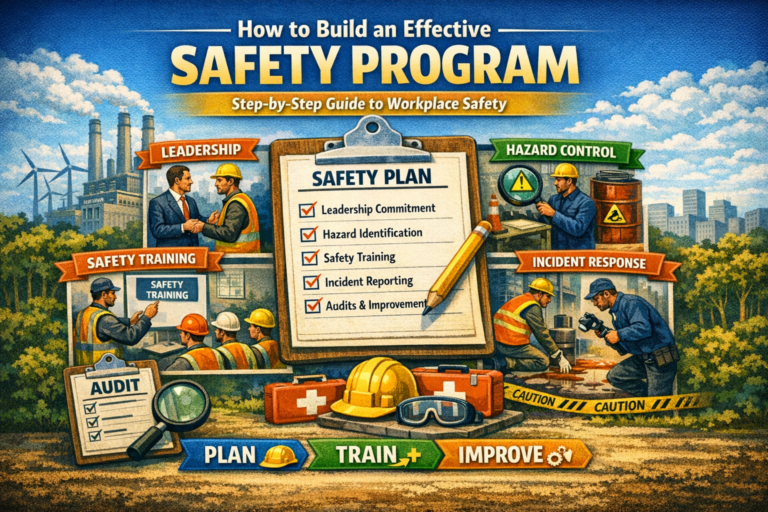
The Complete Guide to Building a Strong Safety Culture
I encourage organizations to implement pre-task planning for any work at heights. Before workers go up, they gather as a team and discuss: What are the specific fall hazards? What’s our fall protection plan? How will we rescue someone if needed? Who’s our competent person? What could go wrong?
This five-minute conversation catches problems before anyone is in danger. I’ve seen workers identify inadequate anchorages, realize they don’t have enough clearance for their lanyards, or recognize that their rescue plan won’t work for the specific location, all before climbing a ladder.
The Bottom Line
Falls are preventable. Not just reducible—preventable. Every worker who goes up should come down safely. This isn’t idealistic; it’s achievable with the right combination of engineering controls, proper equipment, thorough training, and organizational commitment.
Start by questioning whether work needs to happen at elevation. Eliminate the hazard when possible. When work must occur at heights, implement the highest level of protection feasible. Install guardrails rather than relying on personal fall arrest systems when practical. Choose equipment appropriate for the specific application, considering fall clearance, environmental conditions, and the nature of the work.
Train workers not just on how to wear a harness, but on understanding the complete fall protection system. Develop realistic rescue plans and practice them. Document your program thoroughly. And most importantly, build a culture where protecting workers from falls is non-negotiable.
The sound of that worker’s boot scraping on steel still comes back to me sometimes. His system caught him—this time. I want every organization to be able to say the same thing: when falls happen, our systems catch our people. Better yet, I want more organizations to say: we’ve engineered fall hazards out of our operations, and falls don’t happen here anymore.
What’s your organization’s biggest challenge with fall protection? Have you implemented solutions that work particularly well? I’d love to hear what’s working—and what isn’t—in your workplace. Share your experiences in the comments below.