Line Breaking: The Hidden Danger That Keeps Me Up at Night
The call came at 2:37 AM. A maintenance supervisor’s voice, shaking: “We have a man down. Chemical exposure during a valve replacement. He’s not breathing right.” By the time I arrived at the plant, the worker was already on his way to the hospital with severe chemical burns to his face, throat, and lungs. The diagnosis would later confirm permanent lung damage that ended his career.
What happened? A routine valve replacement on what everyone assumed was an isolated and drained line. Except the line wasn’t isolated. It wasn’t drained. And when the maintenance technician broke the flange connection, 300-degree sulfuric acid solution sprayed directly into his face from residual pressure no one knew existed.
The incident was entirely preventable. The line breaking procedure existed on paper, but shortcuts had become normalized over years of “nothing bad happening.” This is the nature of line breaking incidents; they’re rare enough that complacency sets in, but severe enough that when they do occur, the consequences are devastating.
Line breaking is one of the most dangerous routine maintenance activities in industrial facilities. It’s so common that it becomes mundane. Workers break lines every day without incident, which creates a false sense of security. Then one day, all the assumptions prove wrong, and someone gets hurt or killed. Let’s talk about how to prevent that.
What Is Line Breaking and Why Is It So Hazardous?
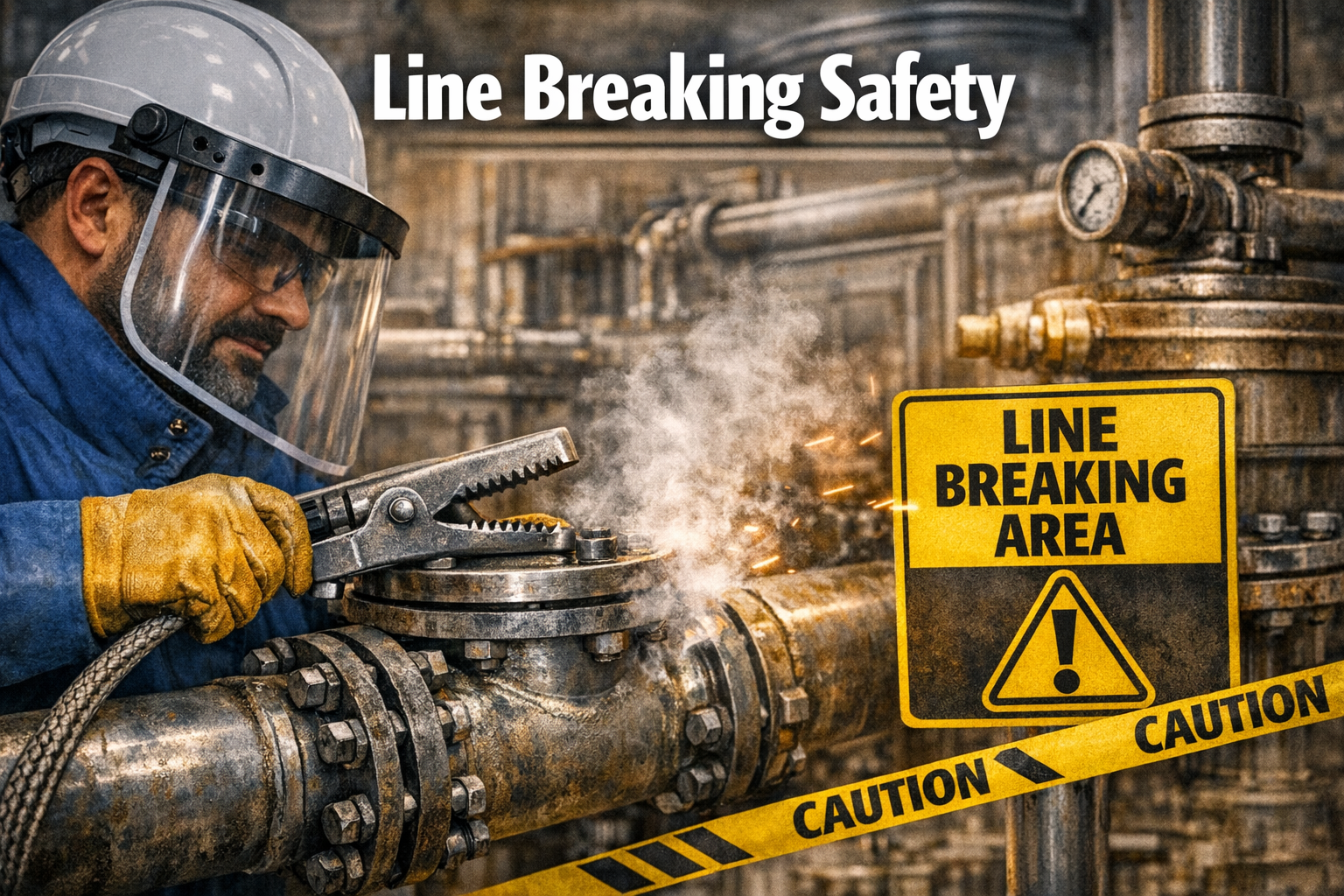
Line breaking means opening a piping system or equipment connection that normally contains process fluids, gases, or materials. This includes removing flanges, disconnecting threaded connections, removing valves, opening equipment for cleaning, or any activity that exposes the interior of a process system.
The term might sound technical, but the activities are everyday occurrences in manufacturing, chemical processing, refineries, and any facility with piping systems. Replace a valve. Clean a heat exchanger. Clear a plugged line. Install a new instrument. Collect a process sample. All of these involve line breaking.
The hazard is deceptively simple: when you open a process line, whatever is inside comes out. That might be harmless water, or it might be toxic chemicals, flammable gases, corrosive acids, materials under pressure, liquids at extreme temperatures, or combinations of these hazards. The consequences of uncontrolled release range from minor chemical exposure to catastrophic fires, explosions, or multiple fatalities.
What makes line breaking particularly dangerous is the frequency with which workers make incorrect assumptions. They assume valves are holding. They assume lines are drained. They assume pressure has been relieved. They assume yesterday’s process conditions still apply today. In many cases, the person doing the work has incomplete information about what’s actually in the line or how the process operates.
The Real-World Consequences: Beyond the Statistics
Industry statistics tell us that line breaking activities account for a significant percentage of chemical releases and injuries in process industries. But statistics don’t convey the human reality of these incidents. Let me share what I’ve seen.
I’ve investigated incidents where workers were flash-frozen by cryogenic liquid nitrogen releases because they didn’t realize a line they thought was ambient temperature actually connected to a cold storage system. I’ve seen flash fires from flammable vapor releases that workers insisted “couldn’t be there” because the line had been shut down for maintenance. I’ve documented serious burns from steam releases at unexpected pressure levels.
One case still haunts me: an experienced technician removing a spectacle blind from a natural gas line. The line had been isolated, depressured, and purged according to procedure. But a check valve upstream was leaking, allowing gas to slowly repressurize the line over the two hours between the lockout and the actual work. When he removed the blind, gas released and ignited from a nearby hot surface. The explosion killed him instantly and injured three others.
The devastating part? A simple pressure check immediately before breaking the line would have detected the leak and prevented the tragedy. But pressure checks weren’t part of the standard procedure because “we already depressured it during lockout.”
The Anatomy of Line Breaking Hazards
Understanding what can go wrong helps us design better controls. Line breaking hazards fall into several categories, each requiring specific precautions.
Residual Pressure
This is the most common cause of serious line breaking incidents. Process systems can maintain pressure even after valves are closed, pumps are shut off, and the system appears inactive. Sources of residual pressure include:
Thermal expansion: Liquid trapped between closed valves expands as temperature increases, creating significant pressure. I’ve seen carbon steel piping rupture from water trapped and heated by ambient temperature on a sunny day. The pressure rise was enough to exceed the pipe’s pressure rating.
Check valve leakage: Check valves rarely seal perfectly. Even a small leak can repressurize a supposedly isolated line over time, especially if there’s significant pressure differential across the valve.
Block valve leakage: Gate valves, ball valves, and butterfly valves all can leak past their sealing surfaces. Age, wear, process solids, and improper maintenance all contribute to valve leakage. Never assume a closed valve provides absolute isolation.
Vapor pressure: Even at atmospheric pressure, volatile liquids generate vapor pressure. Open a line containing a volatile chemical, and vapor will escape even if the line isn’t pressurized. This vapor might be toxic, flammable, or both.
Residual Contents
Just because you’ve drained a line doesn’t mean it’s empty. Low spots in piping hold liquid. Valves trap material in their bodies. Equipment internals create pockets where process material accumulates. Heat tracing can keep materials liquid that would otherwise solidify and seem “empty.”
I’ve watched workers open what they believed were “clean, empty” lines and be surprised by sudden releases of materials everyone thought had been removed. The surprise factor is dangerous—workers aren’t prepared with proper PPE or positioned safely when the unexpected occurs.
Process Condition Changes
What was in the line during normal operation might not be what’s there now. Chemical reactions can occur in stagnant lines. Temperature changes alter chemical properties. Materials can polymerize, crystallize, or decompose. Corrosion can create pyrophoric iron sulfide in lines that contained sulfur compounds.
A particularly dangerous scenario: opening lines that contained air-sensitive materials. Pyrophoric materials spontaneously ignite when exposed to air. Facilities that handle these materials know the risk during operation, but maintenance workers might not realize the line they’re about to open contains a pyrophoric residue.
Cross-Connections and Unexpected Sources
Modern process facilities are complex networks of interconnected piping. Sometimes these connections aren’t obvious or well-documented. Backup systems, emergency connections, utility tie-ins, and undocumented modifications can all create pathways for materials to enter lines that workers believe are isolated.
I’ve seen cases where workers isolated equipment from the obvious process connections but missed a utility line that provided a pathway for material to enter the supposedly isolated system. Drawing reviews and physical line walking are essential to identify all possible sources of material.
The Line Breaking Procedure: What Actually Works
The good news is that line breaking hazards are controllable with proper procedures. The bad news is that many facilities have procedures that look good on paper but fail in practice. Let me walk through what an effective line breaking procedure actually looks like.
Proper Isolation
Isolation starts with identifying all possible sources of material or energy that could enter the work area. This isn’t just the main process lines—it includes utilities, emergency systems, cleaning systems, sample lines, instrument connections, and any other potential pathway.
The gold standard for isolation is physical disconnection—removing spool pieces, installing blind flanges, or creating a physical gap in the piping. This provides absolute certainty that material cannot flow. When physical disconnection isn’t practical, double block and bleed is the next best option: close two valves in series with a vent or drain between them, then open the bleed to verify isolation.
Single valve isolation is risky and should only be used for low-hazard services like ambient temperature water. Even then, you’re betting your safety on that valve sealing perfectly. I recommend against single valve isolation whenever possible.
Document your isolation points. Don’t rely on verbal communication or memory. Create an isolation plan showing every isolation point, valve number, and type of isolation used. This documentation serves multiple purposes: it helps verify the isolation is complete, it guides the work execution, and it ensures proper system restoration afterward.
Depressuring and Draining
After isolation, the next step is removing pressure and contents. This isn’t just about opening a drain valve and waiting. You need to verify pressure is actually relieved and contents are actually removed.
For pressure relief, install a pressure gauge or use a portable pressure indicator to confirm zero pressure. Don’t assume opening a vent valve relieved pressure—verify it. Some materials don’t vent easily due to viscosity, line configuration, or other factors. I’ve seen workers open vent valves and assume pressure was relieved when in fact the vent line itself was plugged.
For draining, verify the system is actually empty. This might mean using multiple drain points to ensure complete drainage from low spots. It might mean using nitrogen or compressed air to push remaining liquid out. It might mean confirming specific gravity or measuring liquid level if the equipment has level instruments.
Temperature is often forgotten in depressuring procedures. If a line contains hot materials, you need to cool it down before breaking the line. Opening a flange on a line containing 400-degree liquid, even at atmospheric pressure, can cause severe steam flash and burns. Allow time for cooling, or implement active cooling measures.
Verification Before Breaking
This is where many procedures fail. The isolation, depressuring, and draining were done hours earlier, often by different people than those doing the actual line breaking. Conditions could have changed. Valves could be leaking. Someone could have mistakenly opened the wrong valve.
Immediately before breaking the line, verify the isolation is still effective:
Check pressure with a gauge or indicator. Any positive pressure requires investigation before proceeding. Even a small pressure indication means something is wrong with your isolation.
Crack open the connection slightly—just enough to break the seal—and listen and look for any release. If you hear hissing, see vapor, smell chemicals, or notice anything unexpected, stop immediately and re-evaluate your isolation.
Test the atmosphere around the work area with a combustible gas meter and toxic gas monitors as appropriate. If the line supposedly contains only inert material, why would you need monitoring? Because your assumptions might be wrong, and the monitor will tell you if hazardous atmospheres are present before you fully open the line.
Controlled Opening
Even with perfect isolation and verification, open lines in a controlled manner. This means:
Position yourself and others outside the potential release zone. Don’t stand directly in front of a flange you’re about to open. Don’t position your face near the connection point. Think about where material would go if there’s an unexpected release, and don’t be there.
Open connections gradually. Loosen bolts in stages. Remove only enough bolts to see if there’s any release. If you’re removing a valve, crack open the connection on the inlet side first to verify it’s truly depressured before fully disconnecting.
Have containment ready. Even if you’ve drained the line, residual material might drip or drain when you open the connection. Have drip pans, absorbent materials, and appropriate waste containers ready before you start.
Wear appropriate PPE. Face shields, chemical-resistant gloves, and protective clothing should be standard for any line breaking activity involving hazardous materials. The fact that you’ve isolated and depressured the line doesn’t eliminate the need for PPE—it just reduces the likelihood you’ll need it. But you wear PPE for the unexpected events.
Common Mistakes That Kill
I’ve investigated enough line breaking incidents to recognize patterns. These are the mistakes that keep appearing in incident reports.
Assuming Instead of Verifying
The most common mistake is assumption-based decision making. Workers assume valves are holding, assume lines are empty, assume previous lockouts are still effective, assume they understand the process conditions. Every one of these assumptions has killed someone.
The solution is simple: verify everything. Don’t assume the isolation is effective—test pressure before opening the line. Don’t assume the line is empty—verify it’s drained and purged. Don’t assume yesterday’s lockout is still protecting you today—check it.
Skipping Steps Under Time Pressure
Production pressure leads to procedural shortcuts. A valve replacement that should take four hours including proper isolation and verification gets rushed into 45 minutes because production needs the line back. Workers skip verification steps, rely on single valve isolation instead of proper blocking, or break lines without adequate depressuring.
These shortcuts work—until they don’t. The statistical reality is that most of the time, you’ll get away with it. Lines usually are empty. Valves usually do hold. Pressure usually is relieved. But “usually” isn’t good enough when the consequence of being wrong is death or serious injury.
Management must support taking the time to do line breaking correctly. If workers feel pressured to cut corners for production reasons, incidents will occur. The few hours lost to proper procedures is nothing compared to the days or weeks of downtime from a serious incident.
Inadequate Communication
Line breaking often involves multiple people across multiple shifts. The person who performs the isolation might not be the person who does the line breaking. The operations staff who knows the process might not be present when maintenance does the work. Critical information gets lost in these handoffs.
I’ve investigated incidents where the day shift operations crew isolated a line and communicated verbally to the night shift maintenance crew that it was ready for work. But the operations crew isolated the wrong line, and the maintenance crew didn’t verify because they trusted the verbal communication. The line they actually opened was under full pressure.
Use written isolation plans. Require sign-offs at each step. Implement positive communication requiring confirmation of specific valve numbers, pressure readings, and drain confirmations. Don’t allow “the line is ready” as adequate communication.
Normalizing Deviations
Over time, small procedural violations become normalized. Someone skips a verification step and nothing bad happens. They skip it again. Soon everyone skips it. The procedure on paper says one thing, but the actual practice is different.
This normalization of deviance creates hidden risk. The procedure was designed to prevent specific failure modes, but workers who don’t understand the engineering rationale behind each step don’t realize what protection they’re giving up when they skip steps.
Regular auditing helps catch normalized deviations before they cause incidents. But audits alone aren’t enough—you need to understand why deviations are occurring. If everyone skips a particular step, maybe the step isn’t practical and needs to be redesigned. Or maybe training is inadequate and workers don’t understand why the step matters. Address the root cause, not just the symptom.
Special Considerations for High-Hazard Services
Some process services require extra precautions beyond standard line breaking procedures. Recognize these high-hazard services and implement appropriate controls.
High-Pressure Systems
Lines operating above 150 psig require special attention. The stored energy in pressurized systems is enormous. Even small volumes of high-pressure gas contain enough energy to cause serious injury or equipment damage if released suddenly.
For high-pressure systems, consider requiring double verification—two qualified people independently confirm pressure is relieved before allowing line breaking. Use calibrated pressure gauges, not just pressure indicators. Document the pressure reading in your permit or isolation certificate.
Pyrophoric and Air-Sensitive Materials
Lines that handle pyrophoric materials or air-sensitive chemicals can’t simply be opened to atmosphere. These systems require inerting with nitrogen or other inert gas before breaking lines. The entire line must be purged and verified to be oxygen-free before opening.
Even after purging, residues can remain that are pyrophoric. Open these lines under inert atmosphere, using specialized procedures and equipment. This isn’t work for general maintenance crews—it requires specialized training and equipment.
Hydrogen Service
Hydrogen presents unique challenges. It leaks through valve seats more readily than other gases. It can embrittle metals. It has a wide flammable range. And it burns with an invisible flame.
For hydrogen systems, implement enhanced purging procedures. Don’t rely on single-point venting—use multiple purge cycles with positive verification of hydrogen concentration before opening lines. Keep ignition sources well away from the work area, even after purging, because residual hydrogen can leak from valve seats during line breaking.
High-Temperature Services
Lines containing hot materials require adequate cooldown time before breaking. The specific time depends on line size, insulation, ambient conditions, and the temperature differential. Don’t guess—calculate or measure actual temperature before proceeding.
Use non-contact infrared thermometers to verify surface temperature before touching equipment. Even if the process has been shut down for hours, insulated lines can retain dangerous temperatures much longer than expected.
Permit Systems and Authorization
Line breaking procedures work best when integrated with a formal permit system. Not every flange removal needs a written permit, but high-hazard line breaking absolutely does.
A line breaking permit serves multiple functions. It forces deliberate planning before work starts. It ensures proper authorization by someone who understands the hazards. It creates a record of isolation points and verification steps. And it ensures proper communication between operations, maintenance, and safety personnel.
What should a line breaking permit include? At minimum:
Specific identification of the line or equipment to be opened, including line number, location, and service. Vague descriptions like “the big valve on the second floor” aren’t adequate.
Process hazard information: what’s normally in the line, operating conditions, special hazards, and exposure limits for any chemicals involved.
Isolation plan showing all isolation points with valve numbers and types of isolation. This should be verified by operations personnel who understand the process.
Depressuring and draining plan with verification requirements. How will you confirm pressure is relieved and contents are removed?
PPE requirements based on the hazards present. Default to higher protection levels when uncertainty exists about residual contents.
Atmospheric monitoring requirements before and during line breaking.
Emergency response procedures in case of unexpected release.
Signatures showing authorization by operations, maintenance, and safety personnel as appropriate.
The permit should remain posted at the work location during the job, and workers should be required to have read and understood it before starting work.
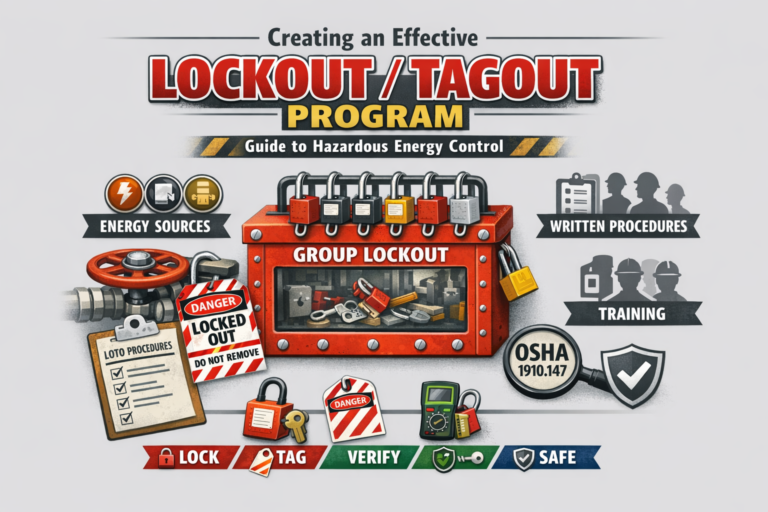
How to Create an Effective Lockout/Tagout Program – Safety-365
Training: More Than Just Procedures
I’ve reviewed many line breaking procedures that were technically sound but failed because workers didn’t understand them. Training must go beyond “here’s the procedure, follow these steps.”
Effective training explains why each step exists. Workers need to understand the physics of pressure relief, the behavior of different materials, the limitations of various isolation methods, and the consequences of procedural failures. When workers understand the “why,” they’re more likely to recognize when conditions don’t match expectations and stop work.
Use incident case studies in training. Share real incidents (anonymized if necessary) showing what happened when procedures weren’t followed or when unexpected conditions existed. These real-world examples make the hazards concrete and memorable.
Include hands-on practice with actual equipment. Have workers practice isolation verification, pressure checking, and controlled opening techniques on training equipment or during supervised real jobs. Classroom training alone doesn’t develop the judgment and skills needed for safe line breaking.
Ensure training covers how to recognize abnormal conditions and what to do when they occur. The procedure tells you what to do when everything goes as planned. Training should prepare workers for when things don’t go as planned—when pressure is still present, when unexpected materials are found, when isolation fails.
Learning From Near Misses
For every serious line breaking incident, there are probably dozens of near misses—situations where luck prevented injury. These near misses are valuable learning opportunities if you capture and analyze them.
Encourage reporting of near misses without punitive responses. If a worker opens a line and discovers unexpected pressure, you want them to report it so you can understand why the isolation failed. If they fear discipline for the procedural violation that exposed the issue, they won’t report, and you’ll never know about the failure mode until it causes a serious incident.
When near misses occur, conduct thorough investigations. Why was pressure present? Why did verification steps fail to detect it? What procedural changes or additional controls would prevent recurrence? Share findings across the facility so everyone learns from each incident.
Blame‑Free Incident Investigations: Why They’re Essential for Workplace Safety – Safety-365
The Bottom Line: Treating Every Line Break as High-Hazard
The challenge with line breaking safety is that most line breaks are routine and uneventful. Workers break hundreds of lines without incident, which creates complacency. The rare serious incident seems like an aberration rather than a predictable result of inadequate precautions.
My recommendation: treat every line break as potentially high-hazard until you’ve verified otherwise. Assume pressure is present until you’ve confirmed it’s relieved. Assume hazardous contents remain until you’ve verified the line is clear. Assume isolation could fail until you’ve tested it.
This defensive mindset—verify, don’t assume—prevents the majority of line breaking incidents. Yes, it takes more time. Yes, it feels overly cautious when you’re breaking the same line you’ve opened a hundred times before. But the one time your assumptions are wrong, this approach saves lives.
Review your line breaking procedures against the guidance here. Are you requiring verification steps, or just isolation steps? Are workers actually following the procedures, or have shortcuts become normalized? Do workers understand why each step matters, or are they just going through the motions?
Line breaking doesn’t have to be high-risk work. With proper procedures, adequate training, and consistent execution, it can be performed safely thousands of times. But it requires vigilance, verification, and a refusal to let complacency set in. The stakes are too high for anything less.
What line breaking challenges have you faced? What procedures or practices have worked well in your facility? I’d love to hear about your experiences—the successes and the near misses—in the comments below.