What Is an EHS Management System? Building Safer Workplaces
An Environmental, Health & Safety (EHS) Management System is the structured framework an organization uses to identify hazards, control risks, comply with regulations, and continuously improve workplace safety. It’s the “operating system” of safety — the set of processes, responsibilities, and expectations that ensure safety isn’t left to chance.
A strong EHS Management System doesn’t rely on luck, individual personalities, or one “safety person” trying to hold everything together. Instead, it creates a predictable, repeatable, and measurable approach to safety that works across departments, shifts, and locations.
This guide explains what an EHS Management System is, how it works, and how to build one that actually improves safety performance.
Why an EHS Management System Matters
Organizations with strong EHS systems consistently outperform those without them. They experience:
- Lower injury and illness rates
- Fewer serious incidents and near misses
- Stronger OSHA compliance
- Reduced insurance premiums
- Higher employee engagement
- Better operational reliability
- Faster response to hazards and emergencies
Without a system, safety becomes reactive — responding to incidents instead of preventing them. With a system, safety becomes proactive, strategic, and integrated into daily operations.
Core Components of an Effective EHS Management System
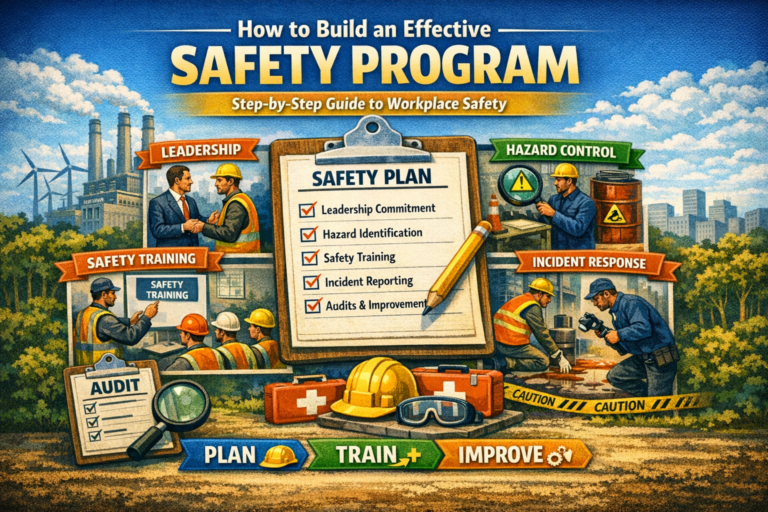
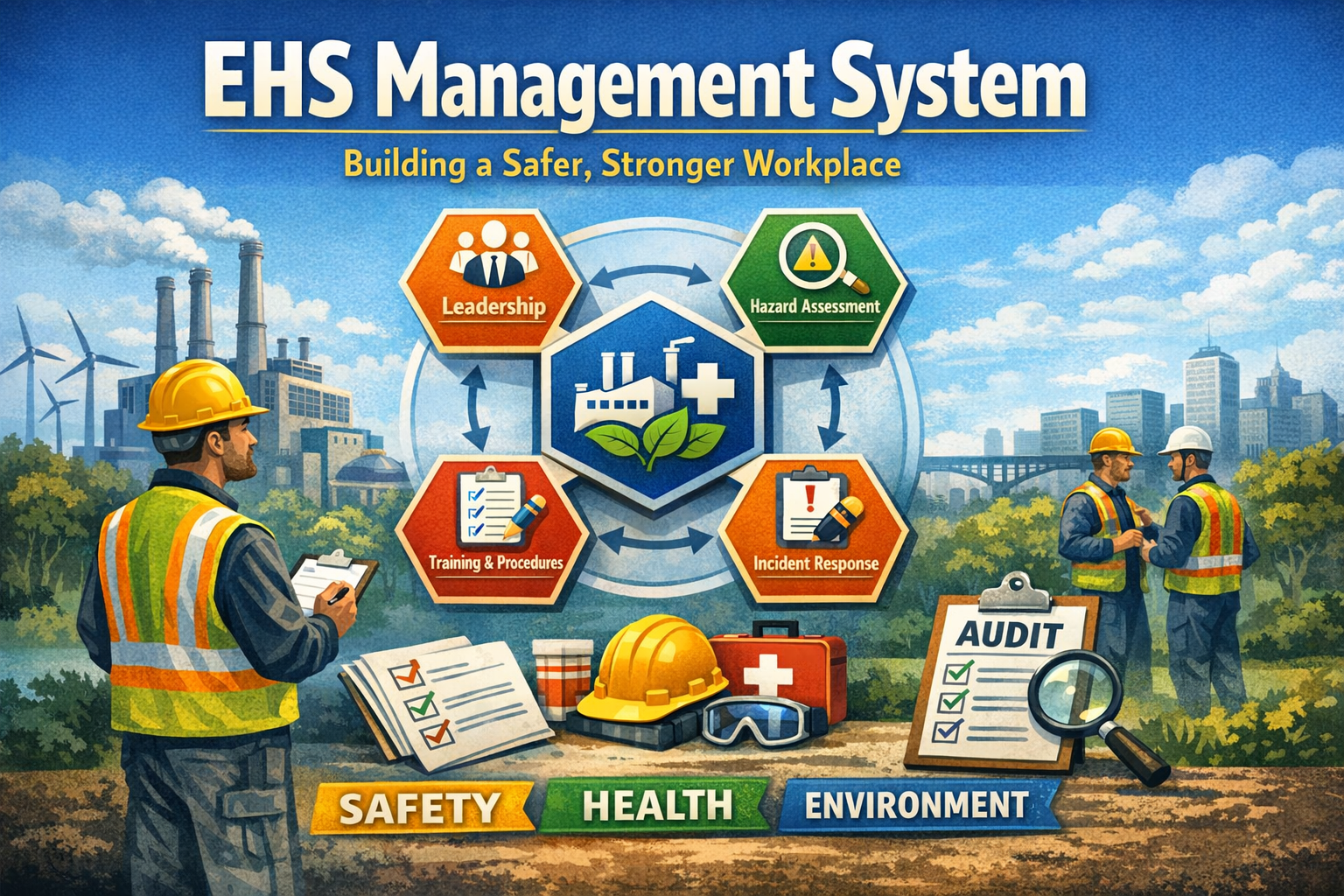
While every organization’s system looks different, the most effective EHS Management Systems share eight essential components.
Let’s break them down in detail.
1. Leadership Commitment & Accountability
Leadership is the engine of the entire system. Without visible, consistent leadership support, even the best-designed safety programs fall apart.
What leadership commitment looks like
- Setting clear safety expectations
- Allocating time, budget, and resources
- Participating in safety meetings and audits
- Holding supervisors accountable for safety performance
- Recognizing employees who contribute to safety
- Making safety part of business decisions
Why it matters
Employees watch what leaders do, not what they say. When leaders model safe behavior and prioritize safety, employees follow.
2. Hazard Identification & Risk Assessment
This is the foundation of every EHS system. You can’t control what you haven’t identified.
Key activities include:
- Routine workplace inspections
- Job Hazard Analyses (JHAs) (Job Hazard Analysis (JHA): A Practical, Step‑by‑Step Framework)
- Employee hazard reporting
- Near miss reporting
- Reviewing incident trends
- Assessing new equipment, chemicals, or processes
Why it matters
Hazard identification is the gateway to every other safety activity — training, controls, procedures, and emergency planning all depend on it. For more information on Identifying Hazards, read Hazard Identification Made Simple: Recognizing Risks Before They Become Incidents
3. Written Policies, Procedures & Standards
Documentation creates consistency. It ensures that tasks are performed the same way, every time, regardless of who is working.
Examples of essential documents
- Safety policies
- Standard operating procedures (SOPs)
- Emergency response plans
- Chemical handling procedures
- Contractor safety requirements
- Lockout/tagout procedures
- Confined space entry programs
Why it matters
Clear documentation reduces confusion, supports training, and provides evidence of compliance.
4. Training, Competency & Communication
Training is more than checking a box — it’s about ensuring employees understand hazards and know how to protect themselves.
Effective training includes:
- Orientation for new hires
- Job-specific training
- Annual refresher training
- Hands-on demonstrations
- Toolbox talks
- Microlearning and short refreshers
- Assessments to verify competency
Why it matters
Training ensures employees can recognize hazards, follow procedures, and respond appropriately in emergencies.
5. Incident Reporting, Investigation & Corrective Actions
A strong EHS system treats incidents and near misses as learning opportunities — not blame sessions.
Key components
- Easy, accessible reporting systems
- Blame-free reporting culture (Blame‑Free Incident Investigations: Why They’re Essential for Workplace Safety)
- Root cause analysis (5 Whys, fishbone diagrams, etc.)
- Corrective action tracking
- Verification that corrective actions are effective
Why it matters
Organizations that investigate effectively prevent repeat incidents and build trust with employees.
6. Emergency Preparedness & Response
Emergencies are unpredictable — but your response shouldn’t be.
Emergency planning includes:
- Fire response
- Medical emergencies
- Chemical spills
- Severe weather
- Evacuations and shelter-in-place
- Communication protocols
- Drills and exercises
Why it matters
Preparedness reduces chaos, confusion, and injuries during high-stress events. Having emergency procedures is important – but drills and exercises are key. Documenting the drills and critiquing them helps ensure your organization is prepared.
7. Audits, Inspections & Continuous Improvement
A strong EHS system is never “finished.” It evolves as hazards change, operations grow, and lessons are learned.
Continuous improvement activities include:
- Regular workplace inspections
- Internal audits
- Third-party audits
- Reviewing leading and lagging indicators
- Updating procedures and controls
- Tracking progress toward safety goals
Why it matters
Continuous improvement ensures your system stays relevant, effective, and aligned with real-world conditions.
8. Employee Engagement & Safety Culture
Employees are the eyes and ears of the workplace. When they’re engaged, safety becomes a shared responsibility.
Ways to engage employees
- Involving them in JHAs
- Encouraging hazard reporting
- Asking for feedback on procedures
- Recognizing safe behavior
- Including them in safety committees
- Giving them ownership of safety improvements
Why it matters
A strong safety culture amplifies every other part of the EHS system. Is there opportunity to improve your safety culture? Find out more: The Complete Guide to Building a Strong Safety Culture.
How an EHS Management System Works in Real Life
Let’s walk through a practical example.
Scenario: A company introduces a new chemical cleaning process
A strong EHS system ensures:
- Hazards are identified (chemical exposure, fumes, skin contact)
- Risks are assessed using a JHA
- Controls are selected using the Hierarchy of Controls
- SDS information is reviewed
- Engineering controls (ventilation) are evaluated
- Procedures are written and posted
- Training is provided to employees
- PPE requirements are established
- Inspections verify controls are working
- Incidents or near misses are investigated
- Improvements are made based on feedback
This is how safety becomes systematic instead of reactive.
Benefits of a Strong EHS Management System
Organizations with mature systems see:
- Fewer injuries and illnesses
- Lower workers’ compensation costs
- Stronger compliance
- Higher employee morale
- Better operational efficiency
- Reduced downtime
- Improved reputation with customers and regulators
Safety becomes a competitive advantage.
Common Mistakes When Building an EHS Management System
Avoid these pitfalls:
- Relying too heavily on PPE
- Writing procedures that no one reads
- Inconsistent training
- Failing to involve employees
- Treating audits as “gotcha” exercises
- Not following up on corrective actions
- Focusing only on compliance instead of risk
A strong EHS system requires consistency, clarity, and commitment.
Conclusion
An EHS Management System is more than a binder of policies — it’s the structure that keeps employees safe, ensures regulatory compliance, and drives continuous improvement. When organizations invest in a strong EHS system, they create safer workplaces, reduce risk, and build a culture where safety isn’t just a priority, it’s a value.