The EHS Leader’s Guide to Building a Compliant Hazard Communication Program
Why Hazard Communication Is a Cornerstone of Every EHS Management System
Every workplace uses chemicals — from cleaning agents and lubricants to solvents, adhesives, paints, fuels, and industrial compounds. Even small shops with only a handful of products still expose employees to chemical hazards that can cause burns, respiratory issues, fires, explosions, or long‑term health effects.
This is why OSHA’s Hazard Communication Standard (29 CFR 1910.1200) exists. Often called “HazCom” or “Right‑to‑Know,” it ensures employees understand:
- What chemicals they’re exposed to
- The hazards associated with those chemicals
- How to protect themselves
- What to do in an emergency
A Hazard Communication Program is not optional — it is a mandatory OSHA requirement for any employer with hazardous chemicals in the workplace.
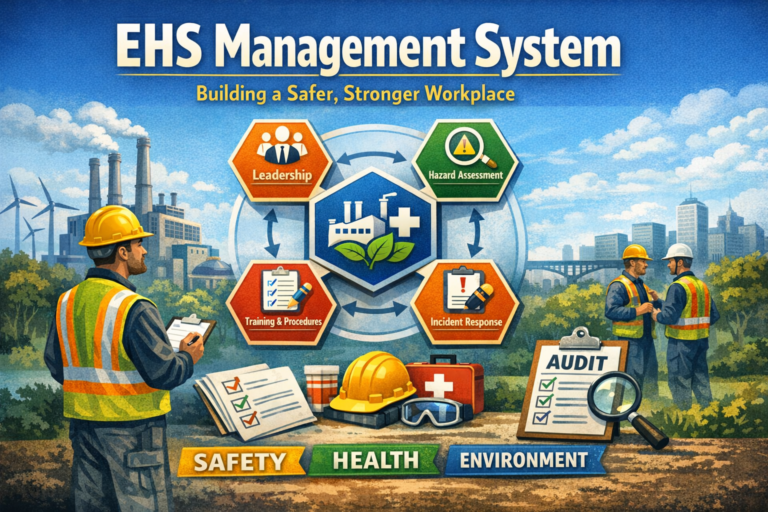
But beyond compliance, a strong HazCom program is a critical part of your EHS Management System, supporting:
- Risk reduction
- Emergency preparedness
- Training and competency
- Incident prevention
- Regulatory compliance
- Safety culture
This guide walks you through exactly how to build a compliant, effective, and practical Hazard Communication Program — step by step.
What Is a Hazard Communication Program?
A Hazard Communication Program is a structured system that ensures employees have the information they need to safely handle hazardous chemicals. OSHA requires employers to develop, implement, and maintain a program that includes:
- A written plan
- A chemical inventory
- Safety Data Sheets (SDS)
- GHS‑compliant labels
- Employee training
The goal is simple:
Employees must know what chemicals they are working with, the hazards involved, and how to protect themselves.
HazCom is one of OSHA’s most frequently cited standards — not because it’s complicated, but because it requires consistent documentation and follow‑through.
Why Hazard Communication Matters
HazCom is more than a compliance checkbox. It protects employees from:
- Chemical burns
- Respiratory hazards
- Skin irritation
- Fire and explosion risks
- Toxic exposures
- Long‑term health effects
- Environmental hazards
A strong HazCom program also:
- Reduces incidents
- Improves emergency response
- Strengthens training programs
- Supports JHA development
- Enhances overall EHS maturity
When employees understand chemical hazards, they make safer decisions — and that’s the foundation of a strong safety culture.
The 5 Required Elements of a Compliant Hazard Communication Program
OSHA’s HazCom Standard requires five core components:
- Written Hazard Communication Plan
- Chemical Inventory
- Safety Data Sheets (SDS)
- GHS‑Compliant Labeling System
- Employee Training
Let’s break each one down.
1. Written Hazard Communication Plan
Your written plan is the backbone of your HazCom program. It must describe how your facility meets each requirement of the standard.
A compliant plan includes:
1.1 Purpose and Scope
Explain why the program exists and who it applies to.
1.2 Roles and Responsibilities
Define responsibilities for:
- EHS staff
- Supervisors
- Employees
- Contractors
- Chemical purchasers
1.3 Chemical Inventory Procedures
How chemicals are added, tracked, and removed from the inventory document.
1.4 SDS Management
Where SDSs are stored, how they are accessed, and who maintains them.
1.5 Labeling System
How primary and secondary containers are labeled.
1.6 Training Requirements
Who is trained, how often, and what topics are covered.
1.7 Non‑Routine Tasks
How employees are informed about hazards during infrequent or unique tasks.
1.8 Multi‑Employer Worksites
How chemical hazards are communicated to contractors and visitors.
1.9 Program Review and Updates
How often the plan is reviewed and who approves changes.
A written plan must be:
- Accessible
- Up‑to‑date
- Specific to your facility
- Reviewed annually
Generic templates are not compliant unless customized to reflect your workplace.
2. Chemical Inventory
Your chemical inventory is a complete list of every hazardous chemical in your workplace.
This includes:
- Liquids
- Solids
- Gases
- Aerosols
- Mists
- Vapors
- Dusts
- Fumes
And it applies to:
- Bulk chemicals
- Small containers
- Cleaning products
- Maintenance supplies
- Laboratory chemicals
- Compressed gases
- Flammables
- Adhesives and sealants
2.1 What Must Be Included in the Inventory?
Each entry should include:
- Product name
- Manufacturer
- Chemical type
- Location
- Quantity
- SDS availability
- GHS classification
2.2 How to Maintain the Inventory
Your inventory must be:
- Accurate
- Updated regularly
- Reviewed at least annually
- Linked to SDSs
A strong inventory system prevents:
- Missing SDSs
- Outdated chemicals
- Improper storage
- Unknown hazards
3. Safety Data Sheets (SDS)
SDSs are the heart of chemical hazard communication. OSHA requires that:
- Every hazardous chemical has an SDS
- SDSs are accessible to employees at all times
- SDSs are not locked away or restricted
- SDSs are updated when new versions are released
3.1 SDS Format (GHS 16‑Section Format)
All SDSs must follow the standardized 16‑section format, including:
- Identification
- Hazard(s) identification
- Composition
- First‑aid measures
- Fire‑fighting measures
- Accidental release measures
- Handling and storage
- Exposure controls/PPE
- Physical and chemical properties
- Stability and reactivity
- Toxicological information 12–15. Ecological, disposal, transport, regulatory
- Other information
3.2 SDS Accessibility Requirements
SDSs must be:
- Available on all shifts
- Accessible without asking permission
- Available in paper or digital form
- Provided to contractors when needed
If employees cannot access SDSs, the employer is out of compliance.
4. GHS‑Compliant Labeling System
OSHA’s HazCom Standard aligns with the Globally Harmonized System (GHS) for chemical classification and labeling.
4.1 Primary Container Labels Must Include:
- Product identifier
- Signal word (“Danger” or “Warning”)
- Hazard statements
- Pictograms
- Precautionary statements
- Manufacturer information
4.2 Secondary Container Labels
Secondary containers (spray bottles, squeeze bottles, jars, etc.) must be labeled unless:
- The employee who filled it uses it immediately
- It never leaves their control
Otherwise, labels must include:
- Product name
- Hazards
- Pictograms (recommended)
4.3 GHS Pictograms
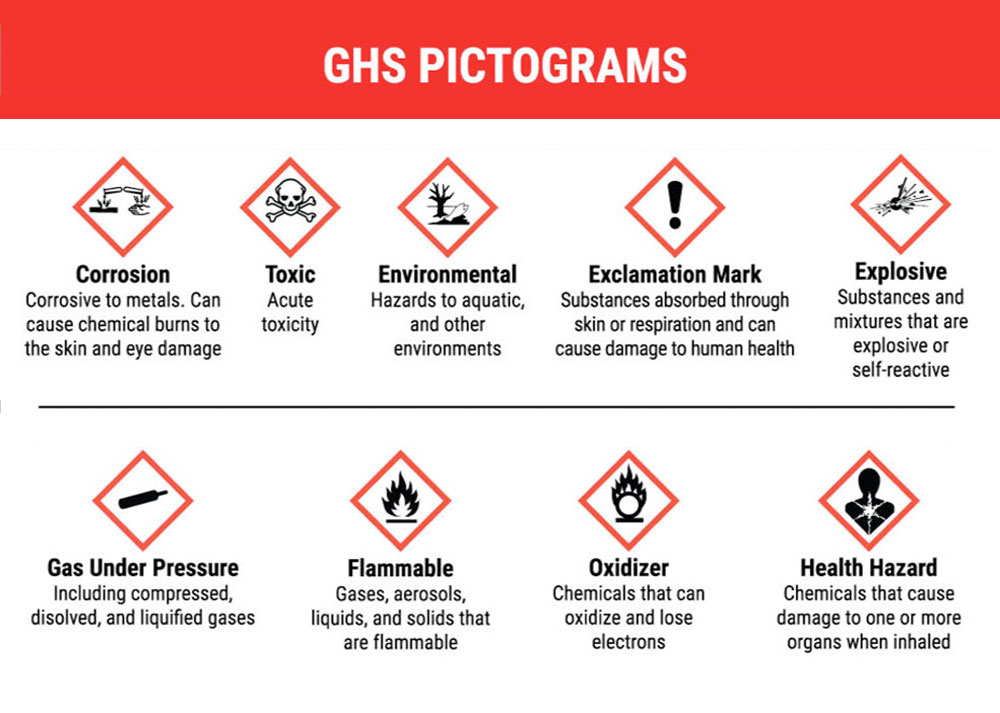
Employees must recognize all nine pictograms:
- Flame
- Flame over circle
- Exploding bomb
- Gas cylinder
- Corrosion
- Skull and crossbones
- Health hazard
- Exclamation mark
- Environment (non‑mandatory under OSHA)
Training must cover what each symbol means.
5. Employee Training
Training is required for:
- New hires
- Employees exposed to chemicals
- Employees who may encounter chemicals during emergencies
- Contractors (when applicable)
5.1 Training Must Cover:
- HazCom program overview
- Chemical hazards in the workplace
- How to read GHS labels
- How to read SDSs
- PPE requirements
- Emergency procedures
- Non‑routine tasks
- Location of SDSs
- How to report chemical incidents
5.2 Training Frequency
Training must be provided:
- At hire
- When new chemicals are introduced
- When new hazards are identified
- When procedures change
- As refresher training (recommended annually)
5.3 Documentation Requirements
Training records should include:
- Employee name
- Date of training
- Trainer name
- Topics covered
- Sign‑in sheet or digital acknowledgment
Training is one of the most common HazCom citations — documentation matters.
How to Build Your Hazard Communication Program (Step‑by‑Step)
Now that you understand the required elements, here’s how to build your program from the ground up.
Step 1: Conduct a Chemical Inventory Audit
Walk through your facility and document:
- Every chemical
- Every container
- Every storage area
- Every process that uses chemicals
Check for:
- Unlabeled containers
- Expired chemicals
- Improper storage
- Missing SDSs
This audit becomes your baseline.
Step 2: Create or Update Your Written HazCom Plan
Use your audit findings to:
- Update roles and responsibilities
- Add new chemicals
- Update SDS procedures
- Improve labeling practices
- Add contractor communication procedures
Your plan must reflect actual practices, not ideal ones.
Step 3: Organize and Update SDSs
Ensure:
- Every chemical has an SDS
- SDSs are current
- SDSs are accessible
- SDSs match your inventory
Digital SDS systems are acceptable if:
- Employees can access them without delay
- Backup access exists during power outages
Step 4: Implement a GHS Labeling System
Standardize your labels:
- Use consistent formats
- Include pictograms
- Train employees on label elements
- Label all secondary containers
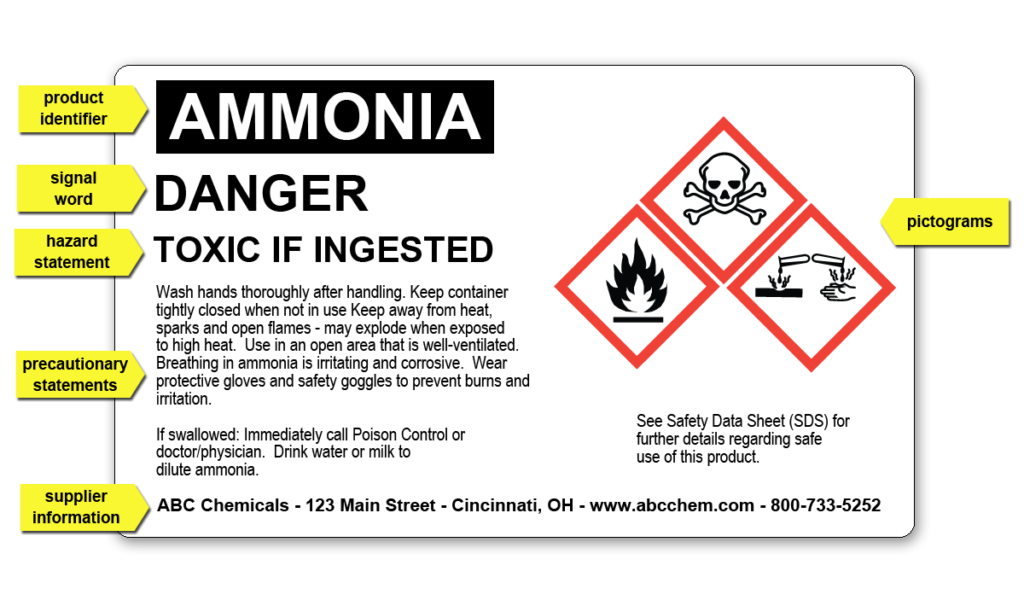
Consider color‑coded labels for quick recognition.
Step 5: Train Employees
Training should be:
- Practical
- Hands‑on
- Scenario‑based
- Reinforced regularly
Include real examples from your facility:
- Solvents
- Cleaners
- Adhesives
- Fuels
- Acids and bases
Employees learn best when training is relevant.
Step 6: Integrate HazCom Into Your EHS Management System
HazCom should connect to:
6.1 JHAs
Chemical hazards must be included in job hazard analyses.
Job Hazard Analysis (JHA): A Practical, Step‑by‑Step Framework
6.2 LOTO Procedures
Some chemicals require isolation before maintenance.
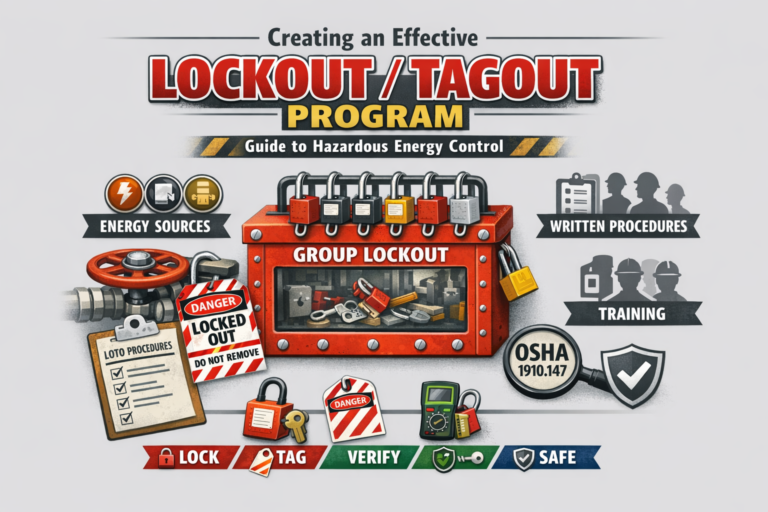
How to Create an Effective Lockout/Tagout Program
6.3 Incident Reporting
Chemical spills, exposures, and near misses must be reported.
Incident Reporting: Why Employees Don’t Report — and How to Fix It
6.4 Emergency Response Plans
SDSs guide spill response and first aid.
6.5 Training Programs
HazCom training should reinforce PPE, emergency response, and safe handling.
Step 7: Review and Improve the Program Annually
Annual reviews should include:
- Inventory updates
- SDS updates
- Training refreshers
- Labeling audits
- Employee feedback
- Incident trend analysis
Continuous improvement is the hallmark of a mature EHS system. Once again, document, document, document. Even if the review does not identify any gaps, document the process.
Common HazCom Mistakes (and How to Avoid Them)
1. Missing or outdated SDSs
Solution: Assign SDS management to a specific role. This is often filled by someone in Procurement or Product Stewardship.
2. Unlabeled secondary containers
Solution: Provide pre‑printed labels and enforce usage.
3. Incomplete chemical inventory
Solution: Audit quarterly.
4. Poor training documentation
Solution: Use sign‑in sheets or digital tracking.
5. Generic written plans
Solution: Customize your plan to your facility.
6. Chemicals stored improperly
Solution: Train employees on segregation and compatibility.
7. Contractors not informed of hazards
Solution: Add contractor communication to your plan.
Final Thoughts: HazCom Is a Foundation, Not a Form
A strong Hazard Communication Program is more than paperwork — it’s a living system that protects employees, prevents incidents, and strengthens your entire EHS Management System.
When employees understand chemical hazards, they:
- Make safer decisions
- Respond better to emergencies
- Use PPE correctly
- Report hazards sooner
- Build a stronger safety culture
HazCom is one of the most important programs you will ever implement — and one of the most impactful.